The recordings exist; the rest is inference
Robert Johnson cut twenty-nine songs across two recording sessions — San Antonio in November 1936, Dallas in June 1937 — and died in August 1938, almost certainly in Greenwood, Mississippi. He was in his mid-twenties. Those facts are documented. What grew around them is a separate matter entirely: a mythology dense enough that it now obscures the music itself, which is the one thing nobody has to argue about.
The sessions were commercial recordings made for the American Record Corporation. Johnson recorded in a makeshift studio — a rented room in San Antonio, then a warehouse space in Dallas — and the engineer placed a microphone, Johnson sat facing a wall for acoustic reasons, and he played. The results were released on the Vocalion label in small pressings intended for the Black Southern market, the same distribution network that carried recordings by Charley Patton and Son House before him. Some sides sold adequately; none sold well enough to make Johnson famous in any commercial sense during his lifetime.
What he left is exactly twenty-nine distinct performances, some recorded in multiple takes. The full surviving catalogue was first assembled on a Columbia double LP in 1961 and then definitively reissued by Columbia in 1990, when the compilation Robert Johnson: The Complete Recordings became, unexpectedly, a commercial phenomenon — it entered the Billboard pop charts, which no one had predicted for a roughly fifty-year-old commercial recording by a man almost no one outside blues scholarship had heard of. That reissue is the origin of the mainstream reputation, not the recordings themselves, not Johnson's life, and not his death.
Chronology
- 1911born in Hazlehurst, Mississippi
- November 1936first session, San Antonio, for American Record Corporation
- June 1937second session, Dallas
- August 1938death near Greenwood, Mississippi
- 1961first posthumous Columbia compilation
- 1990The Complete Recordings reissue; reaches Billboard pop charts
What the twenty-nine songs contain
The catalogue is uneven, as any twenty-nine-song body of work by a young musician would be. Several tracks are formal exercises in established Delta blues conventions — the walking bass figures, the vocal placement, the lyric formulas Johnson shared with every musician working the same circuit. Others are stranger, denser in imagery and rhythmically more compressed than the surrounding tradition. "Cross Road Blues," "Hellhound on My Trail," and "Love in Vain" belong to the second group. They are remarkable recordings. Remarkable is not the same as supernatural, and the supernatural explanation arrived later and by degrees.
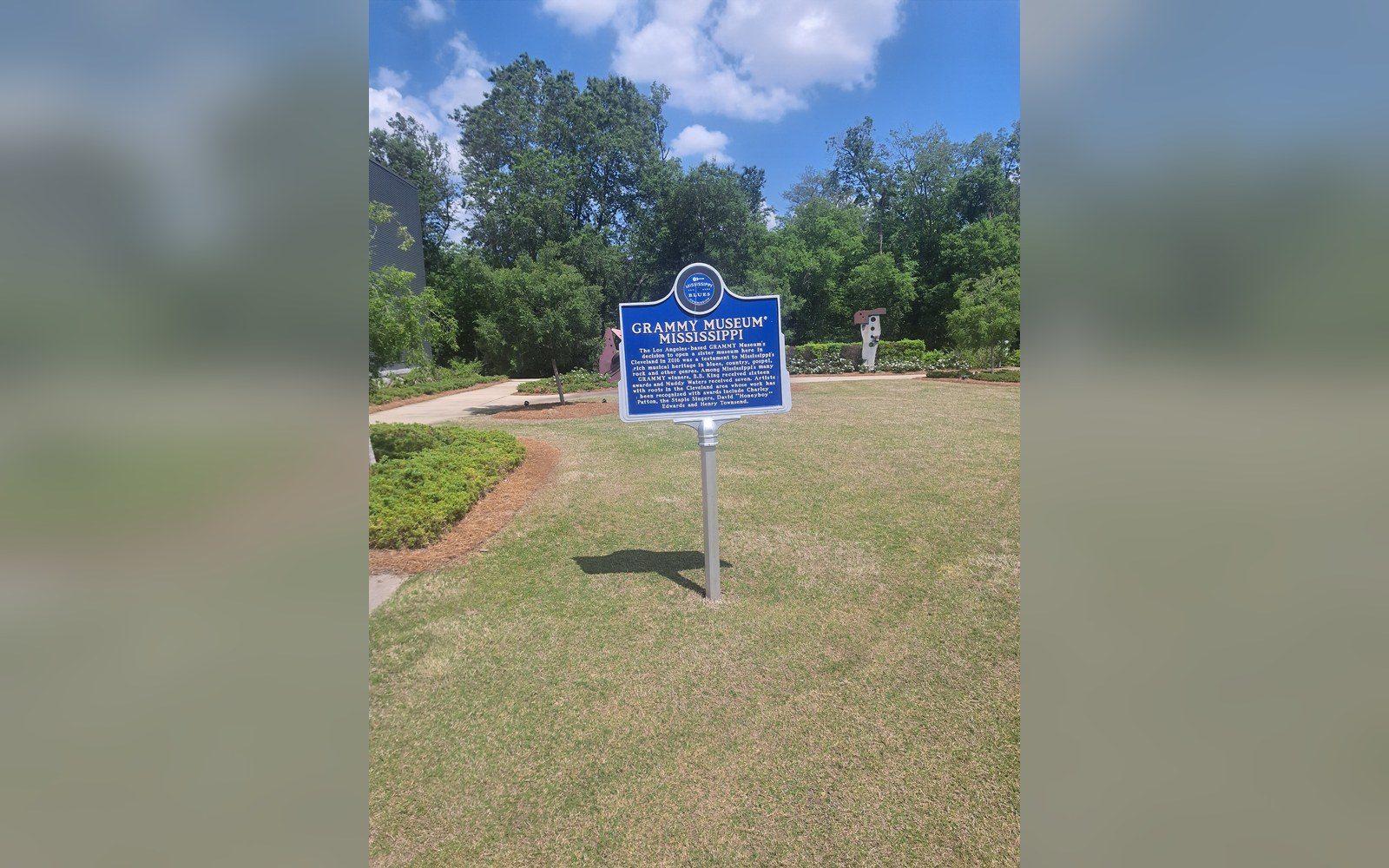
The crossroads legend — that Johnson sold his soul to the devil at a Mississippi crossroads in exchange for guitar technique — has no documented source from Johnson's own lifetime. It appears in print in the decades after his death, assembles itself into a fixed narrative through the 1960s folk revival, and calcifies into something treated as biographical fact by the time of the 1990 reissue. The Mississippi Blues Trail marker at Clarksdale acknowledges the legend's cultural weight without endorsing it as history, which is the only honest position available.
What the songs themselves contain is more interesting than the legend. Johnson's lyrics move through a specific geography — Highway 61, the Sunflower River bottom, the rail lines running north — and through a specific social texture: the transient labour market, the boarding houses, the juke joints operating outside the plantation economy's direct supervision. Sharecropping and the furnish system that enforced it appear in the songs as pressure and constraint rather than as subject matter; you hear their weight in what the singer is running from, not in direct description.
The biographical record and its limits
Two photographs of Johnson exist and are authenticated. One shows him in a suit, a cigarette held loosely, his guitar neck visible at the frame's edge. The other, a photobooth strip, shows him playing. Both surfaced decades after his death. For most of the twentieth century, no image of Johnson was confirmed, which created a visual vacancy that the mythology was happy to fill.
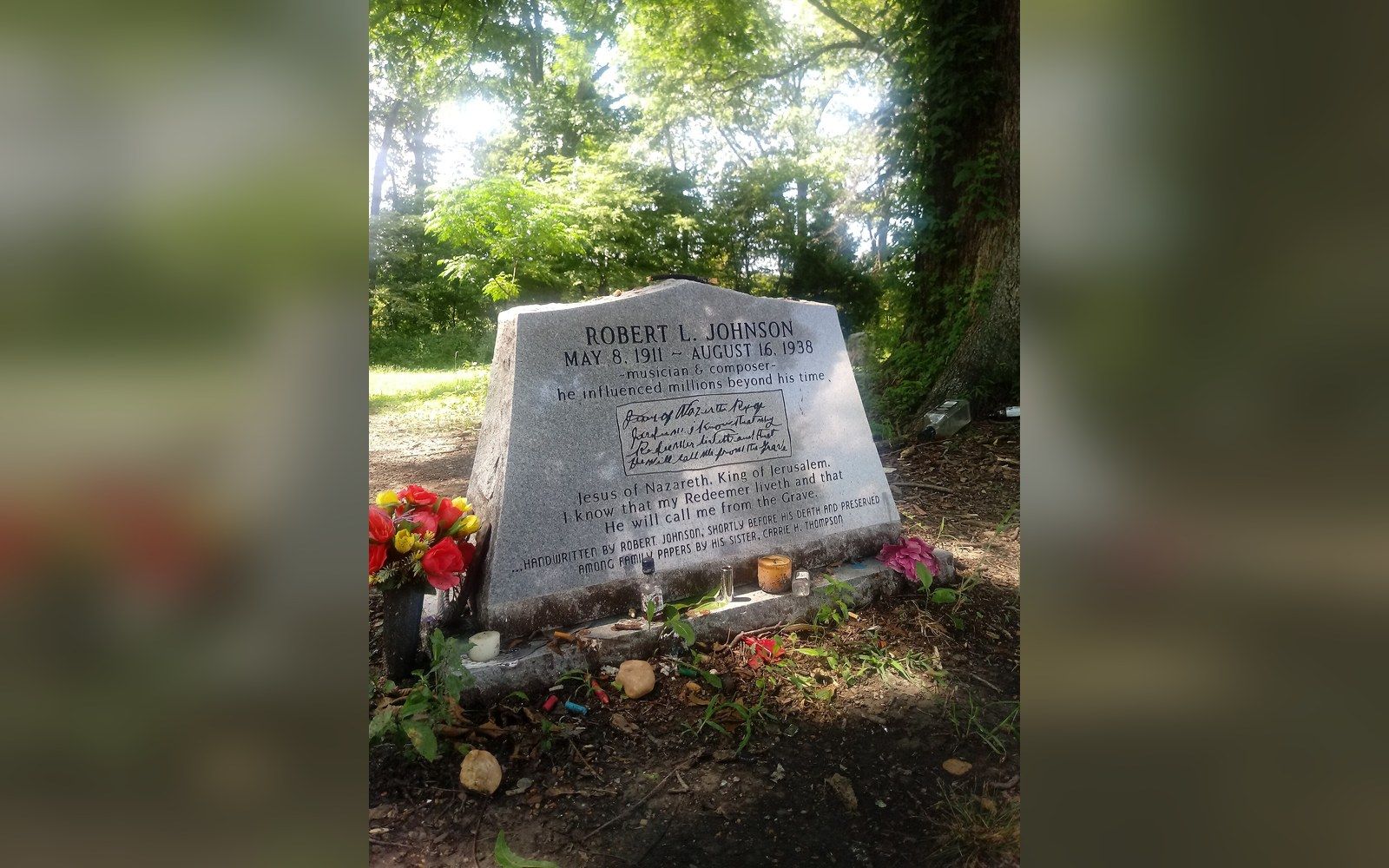
His death certificate, held in Mississippi vital records, records the cause of death as unknown. He was buried near Greenwood; the precise grave site was disputed for years, with three separate locations claimed by different parties. The dispute is itself a minor index of how thoroughly the apparatus of legend operates on the historical record.
What can be established: Johnson was born in Hazlehurst, Mississippi, in 1911. He grew up partly in the Delta, spent time on the Robinsonville plantation in Tunica County, and moved through the circuit of juke joints and Saturday dances that connected Clarksdale, Leland, Greenville, and the smaller crossroads towns. He knew Son House. He was observed, by multiple later witnesses, learning fast — the speed of his development as a guitarist was noted by contemporaries and is probably the mundane origin of the supernatural explanation. Musicians who work intensively and obsessively improve quickly. The crossroads story packages that fact as miracle.
It appears in print in the decades after his death, assembles itself into a fixed narrative through the 1960s folk revival, and calcifies into something treated as biographical fact by the time of the 1990 reissue.
He was working in the Greenwood area when he died, apparently poisoned — strychnine is the most frequently cited cause, administered by a jealous husband according to the most common account. The account is plausible. It is also unverified.
The argument and what it costs
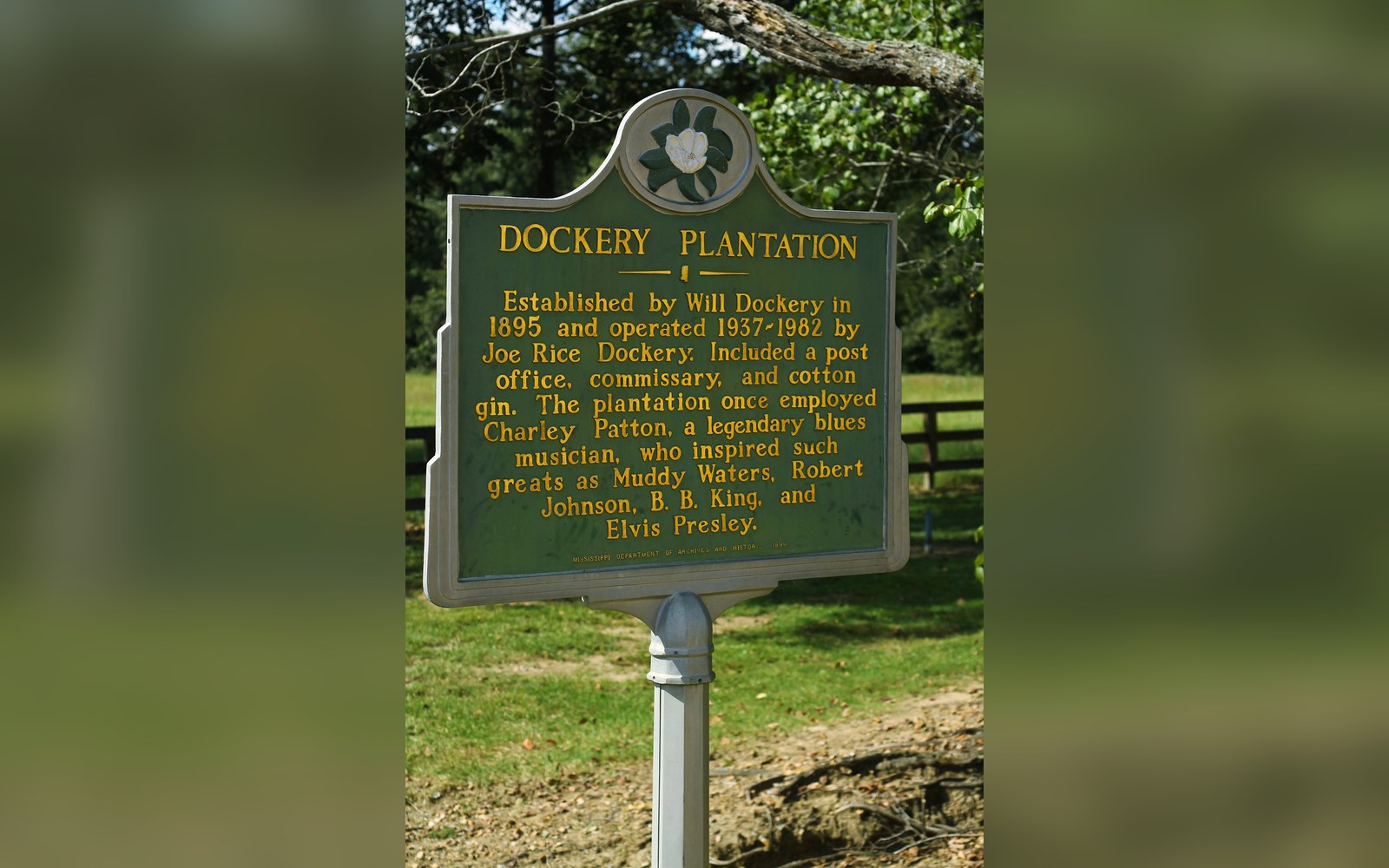
The mythology costs something concrete. It pulls attention toward an unanswerable origin story and away from the twenty-nine songs, which are answerable — you can listen to them, analyze them, place them in the tradition they come from and extend. The Dockery Farms lineage that runs through Patton and House to Johnson is a documented musical geography; it requires no embellishment. Johnson heard those musicians, absorbed what they did, and added something of his own. That is the actual story, and it is sufficient.
The 1990 Columbia reissue carries detailed liner notes by Stephen LaVere that represent the most careful assembly of verified biographical detail available up to that point. Columbia/Legacy's own documentation ↗ of the recording sessions — session dates, matrix numbers, take sequences — provides the firmest ground the record offers. Everything beyond that ground is interpretation, inference, or invention, and the three categories are not equivalent.
Johnson made twenty-nine recordings in two rooms over scattered days in 1936 and 1937. They survive. That survival is the fact worth dwelling on: the American Record Corporation's commercial infrastructure, the Vocalion pressing plant, the surviving 78s that later researchers tracked through used record shops and estate sales — a chain of ordinary contingency that preserved something worth preserving. The legend makes the preservation seem inevitable. It was not. It was luck, and the luck landed on music that rewards the attention a myth would otherwise consume.
Read next
The earliest of the names
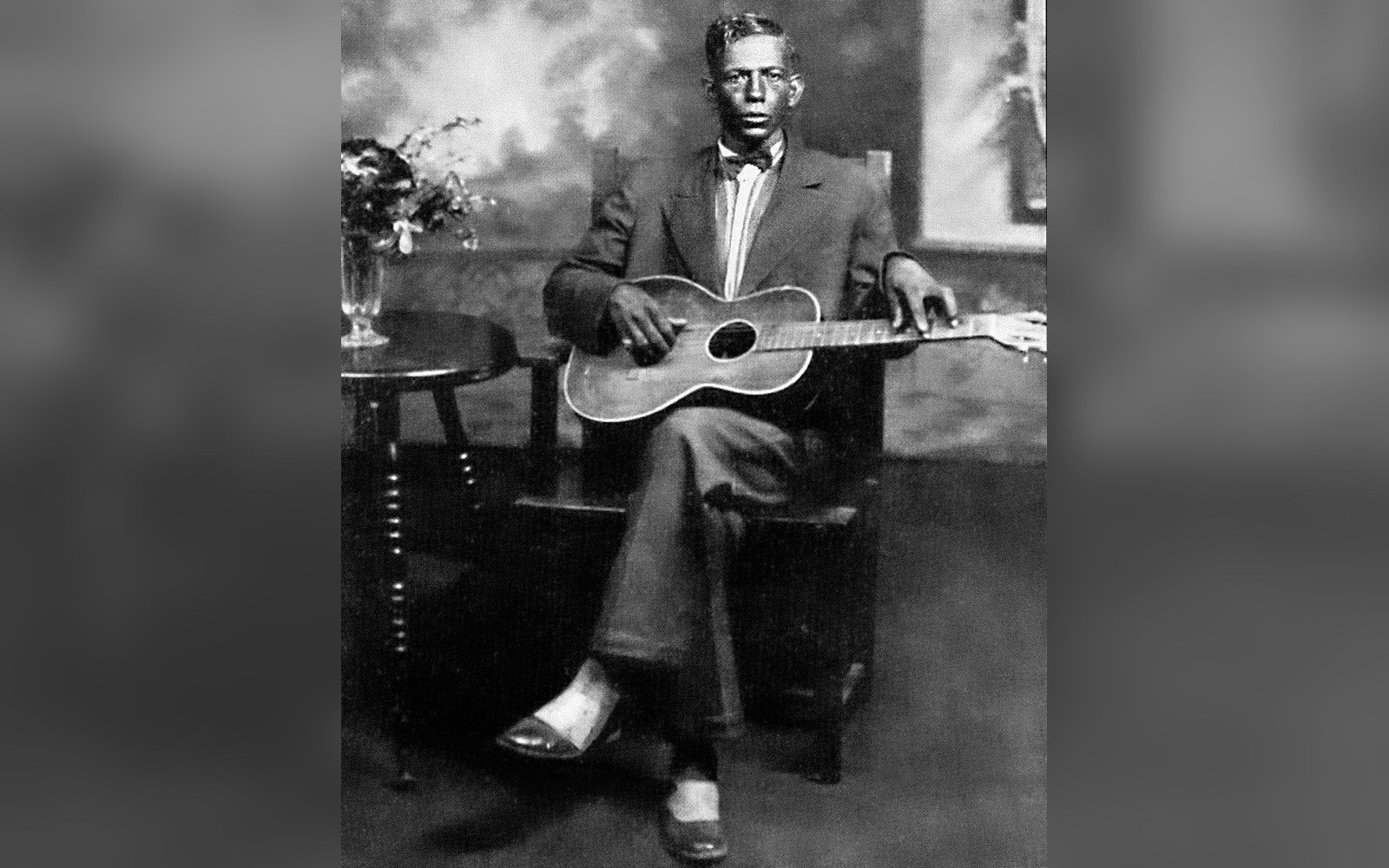
Charley Patton's recordings from 1929 onward are the earliest substantial body of Delta blues on record, and they are dated and catalogued.
Off Dockery
The tractor finished what the flood started
Mechanical cotton harvesting removed the labour demand that had held the population in the Delta, and the depopulation follows the machine's arrival.
Shares and Trains
The railroads that carried it
The Illinois Central and its connections ran directly north, which is why the destination cities are the ones they served.
Shares and Trains