A trail built from evidence
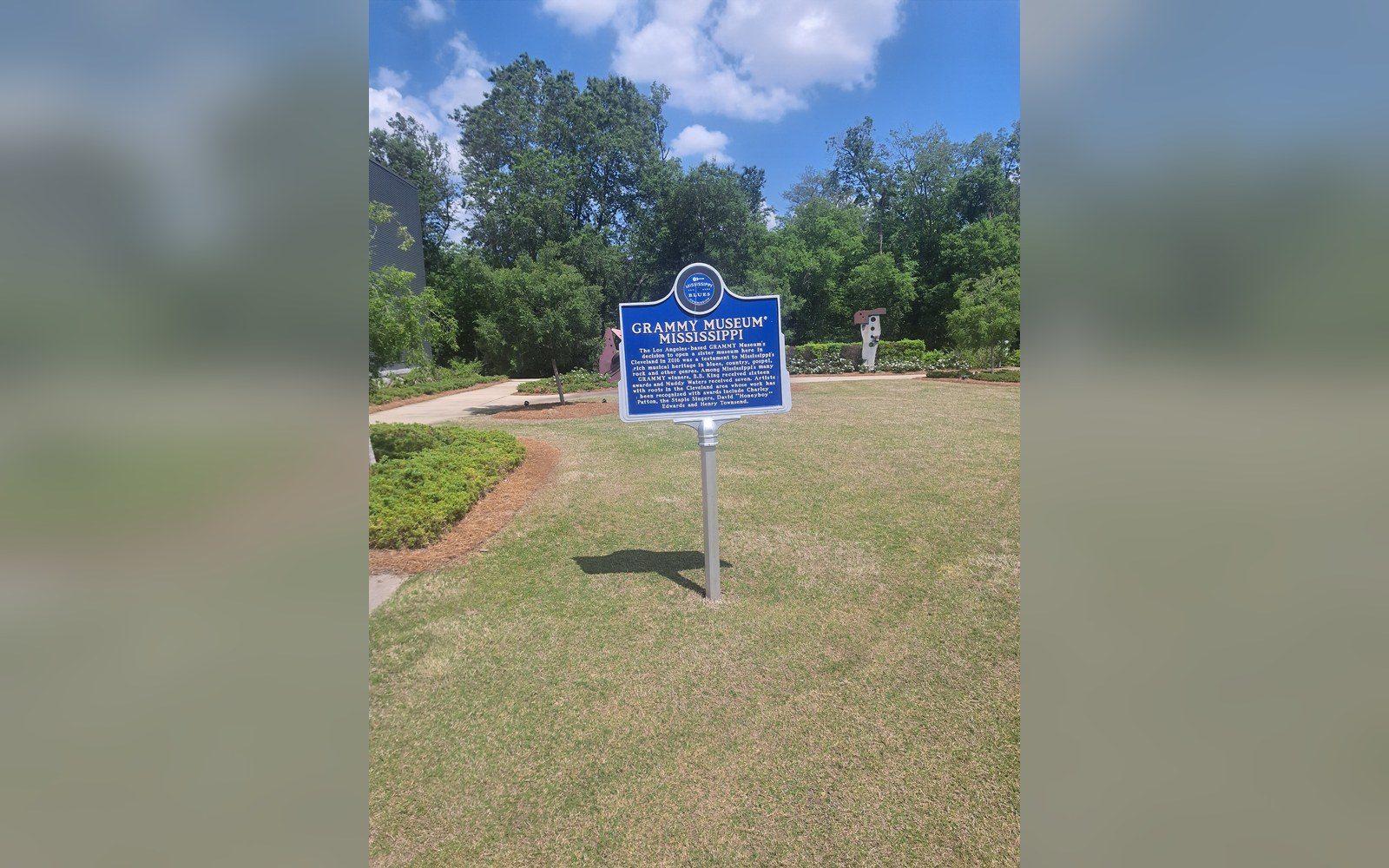
The Mississippi Blues Trail, administered by the Mississippi Blues Commission, has placed more than two hundred markers across the state, with the heaviest concentration in the Delta. Each one carries a bronze text: a name, a date, a recorded fact. That specificity matters. The Delta's musical history traveled orally for decades — in family memory, in interviews, in liner notes written by researchers who arrived thirty years after the fact. The markers do something different. They plant a claim in the ground at a particular GPS coordinate and defend it in writing.
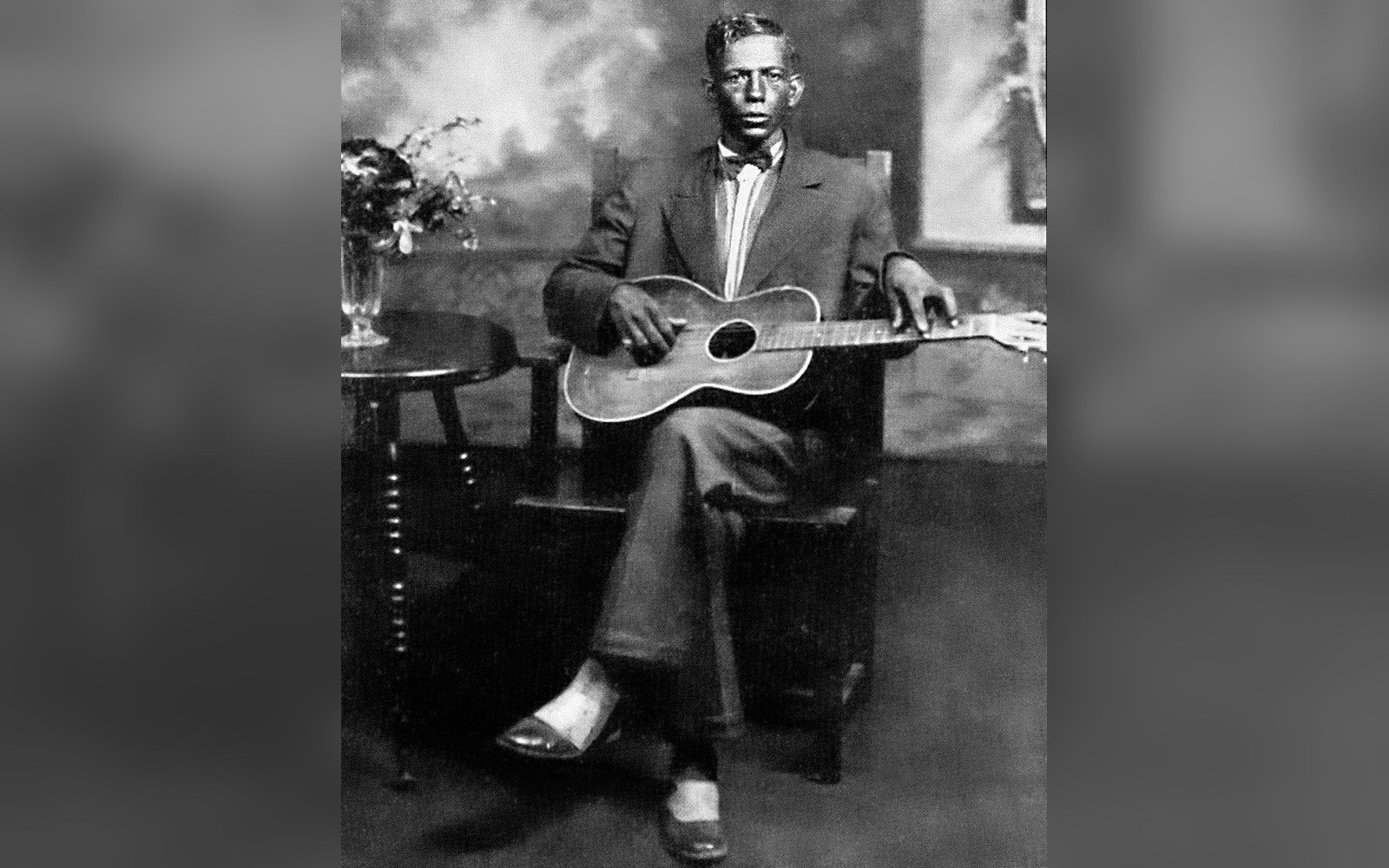
At Dockery Farms, northeast of Cleveland in Bolivar County, the marker anchors a site that scholars of early recorded blues have returned to repeatedly. Charley Patton lived and worked there for much of his adult life; Son House passed through; the plantation's commissary, cotton gin and labor rows formed the social world that shaped the music. The marker does not make these claims poetically. It states them with dates, which is the only way a physical marker can earn its authority.
Bronze texts and what they settle
A Blues Trail marker is roughly four feet tall and stands on a metal post. The Mississippi Blues Commission sets the content through a research and nomination process that requires documented sourcing — published scholarship, recorded interviews, verified archival material. Proposals without a paper trail do not become bronze. That filter has two effects: it gives the trail credibility as a historical record, and it necessarily leaves gaps, because not everything that happened in a Delta juke joint left a document.
The Dockery Farms marker is one of the more cited on the trail precisely because the documentation is unusually solid. Dockery's payroll records, the testimony of musicians recorded by researchers including David Evans and others working in the field in the 1960s and 1970s, and the early discography of Patton's Paramount recordings all converge on the same site. That convergence is what earns a marker its placement, and what makes the placement itself a form of historical argument.
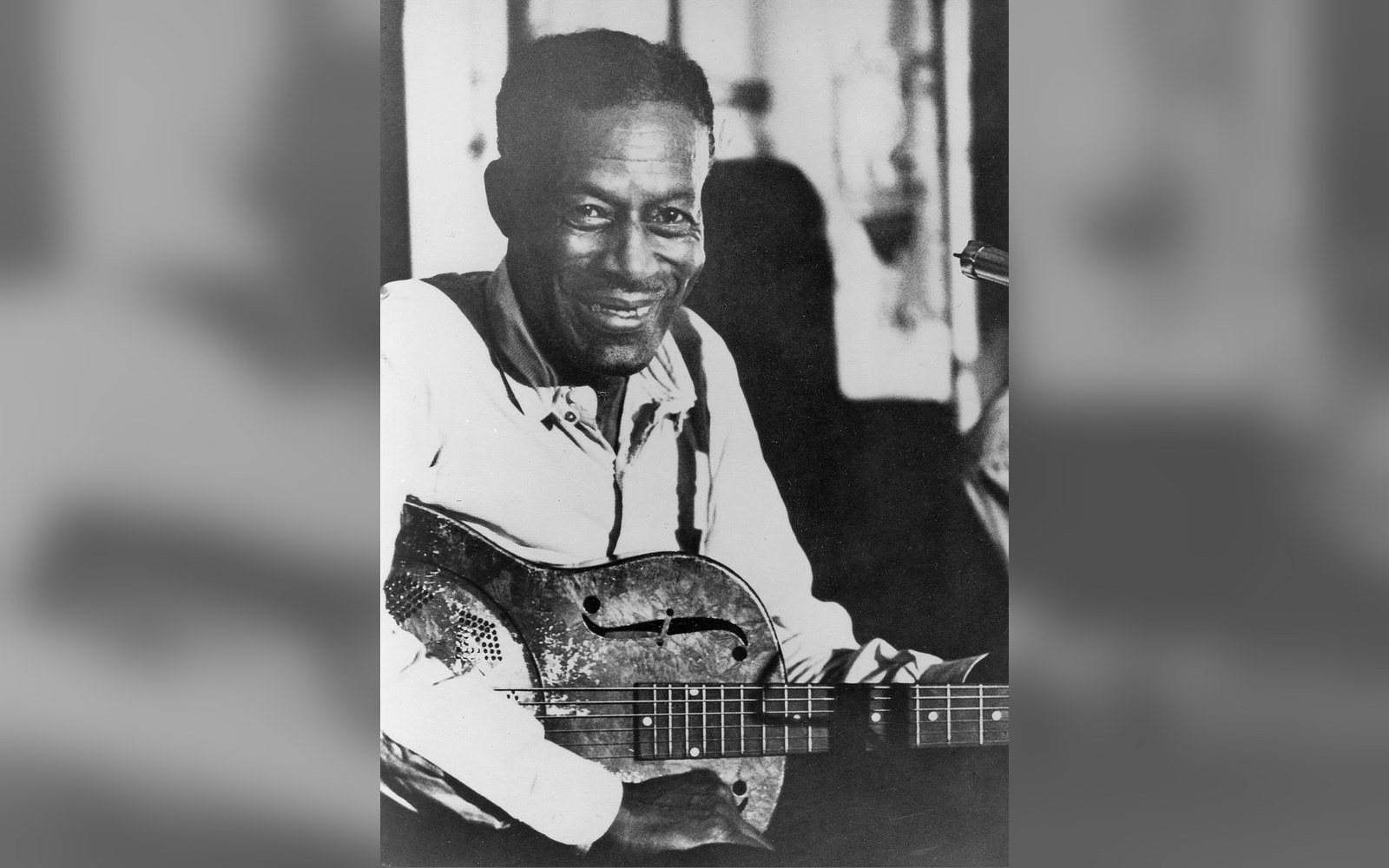
For Son House, the trail's marker situates a musician whose career had two documented phases — the early 1930s recordings made for Paramount, and the rediscovery sessions that followed after researchers located him in Rochester, New York, in 1964. The marker holds the earlier claim: where he was in Mississippi before the long silence. For Robert Johnson, whose twenty-nine sides recorded in San Antonio and Dallas in 1936 and 1937 are the entire surviving studio record, markers in the Delta work differently — they document a region rather than a single fixed site, because Johnson moved and his movements were not always recorded.
Read next
- Documented sourcing required
- published scholarship, verified archives, recorded interviews
- No documentation, no bronze
- the filter creates gaps as well as fixes
- Dockery Farms supported by payroll records, musician testimony from 1960s–70s fieldwork, and Patton's discography
- Dockery Farms supported by payroll records, musician testimony from 1960s–70s fieldwork, and Patton's discography
- National Register of Historic Places listing adds a second layer of physical verification
- National Register of Historic Places listing adds a second layer of physical verification
The map as method
What the Blues Trail produces, cumulatively, is a method for reading landscape. A traveler following the markers from Clarksdale south through the Delta — through Indianola, through Leland, past the cotton fields that have replaced the bottomland hardwood that the earlier clearing removed — is moving through an argument about cause and effect. Sharecropping and the furnish system kept workers tied to specific plantations through debt; the Illinois Central and other lines north eventually offered an exit; the music that left on records and in the memories of people who took those lines north carried the Delta's geography inside it.
The markers make that argument legible to someone who did not grow up inside it. They do not explain the alluvial plain or the levee system or the economics of overbank cotton agriculture, but they stand inside that landscape and point at it. Dockery Farms is not a museum reconstruction. The cotton fields still run to the tree line. The surviving structures are documented by the National Register of Historic Places ↗, which added Dockery to its listings as a historic district and found the physical evidence sufficient to support the historical record the marker states.
The Blues Trail does not make history. It marks where history left enough evidence to be named, dated, and fixed in place — which is, in the Delta, harder than it sounds, and worth more than it looks.
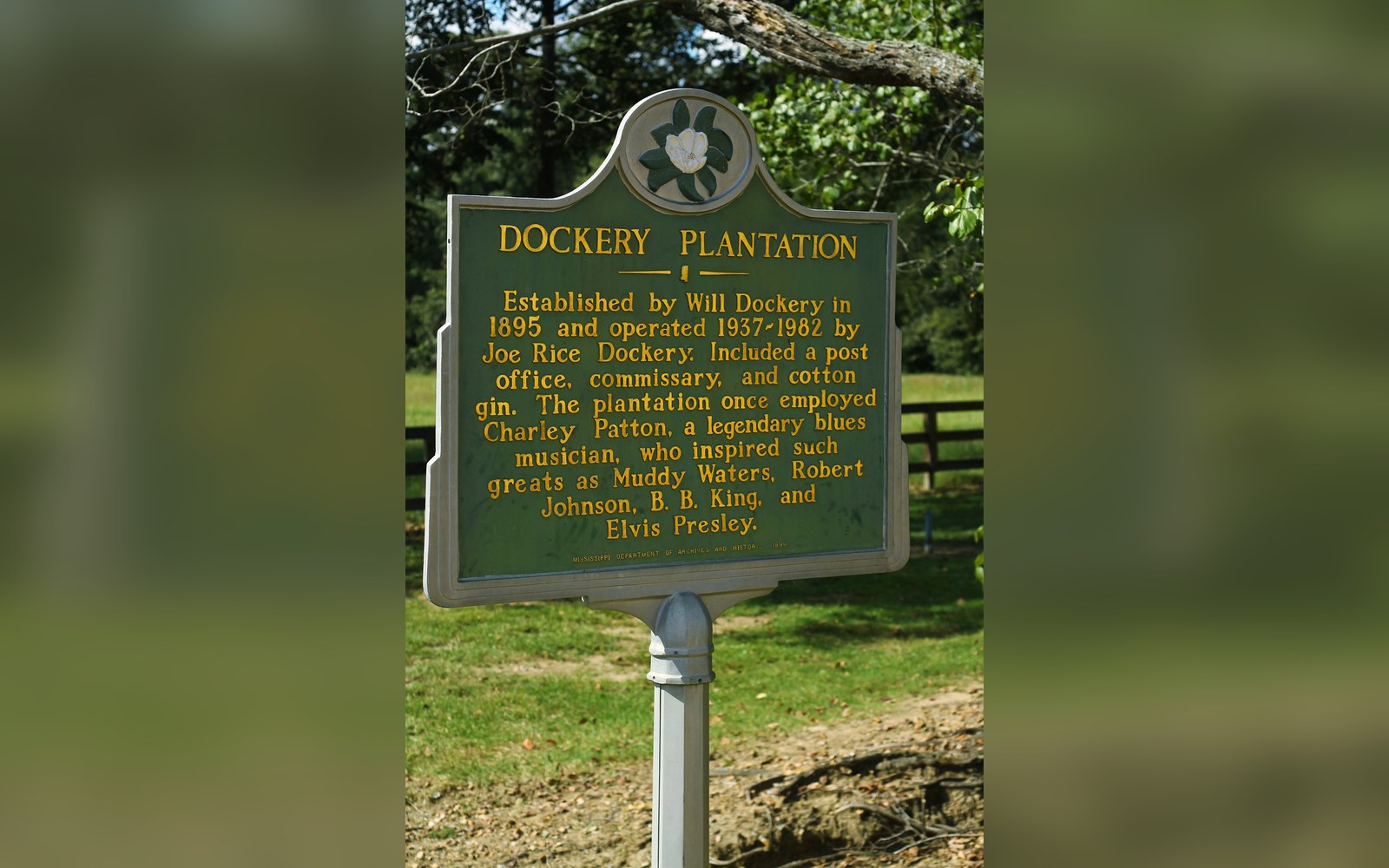
The Dockery Farms marker is one of the more cited on the trail precisely because the documentation is unusually solid.
Elsewhere in Off Dockery

The tractor finished what the flood started
Mechanical cotton harvesting removed the labour demand that had held the population in the Delta, and the depopulation follows the machine's arrival.
Shares and Trains
The railroads that carried it
The Illinois Central and its connections ran directly north, which is why the destination cities are the ones they served.
Shares and Trains
A town that claims a title in writing
Belzoni in Humphreys County calls itself the Catfish Capital of the World, and the claim rests on pond acreage and processing rather than on folklore.
Ponds & Plants