When the price of corn moves, so does everything downstream
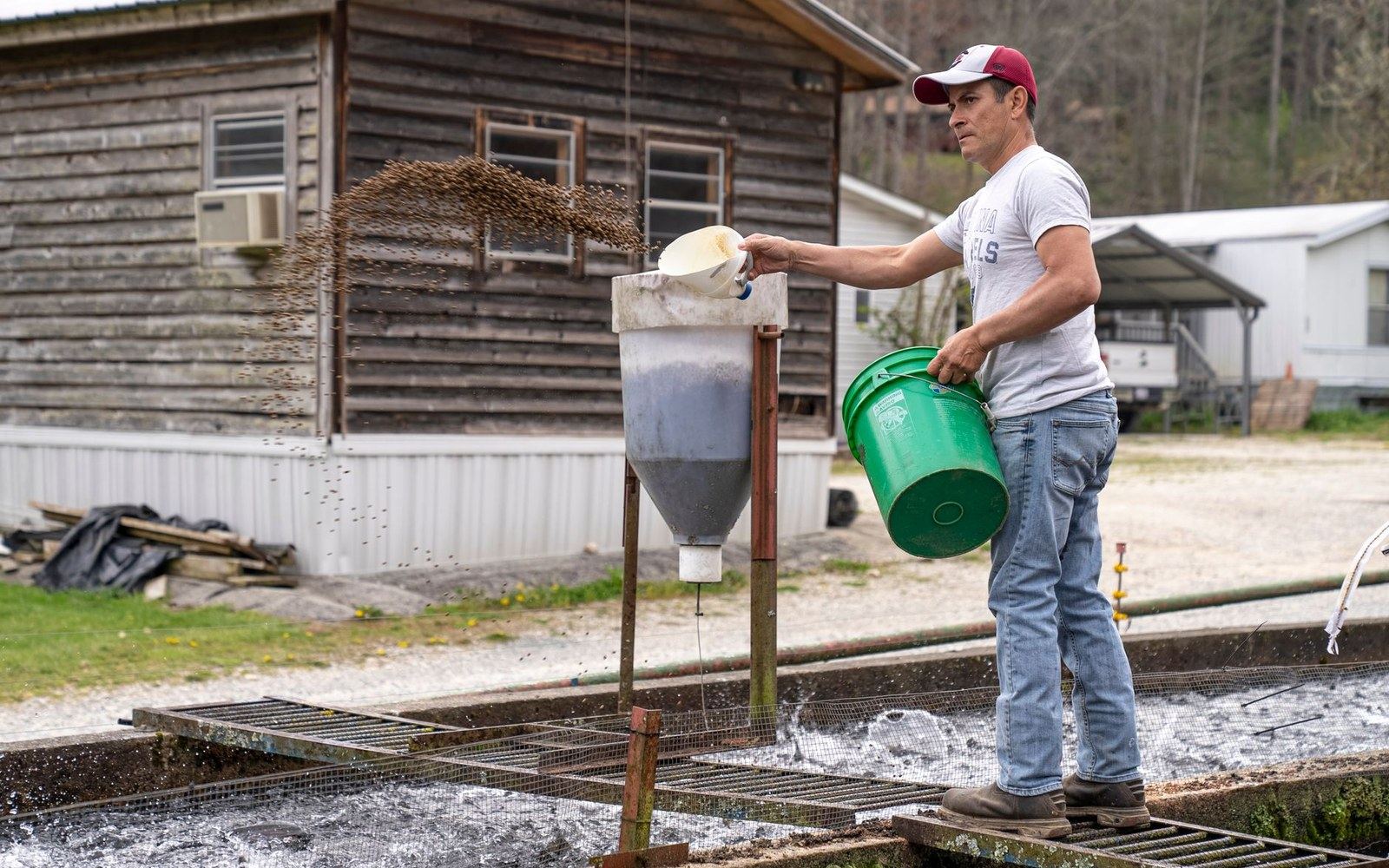
A catfish pond is not self-financing. The fish eat, and what they eat is purchased — pelleted feed made primarily from soybean meal and grain, manufactured off-farm and priced against commodity markets the Delta farmer does not control. Because feed typically accounts for roughly half of variable production costs in a commercial channel catfish operation, the industry's viability tracks the Chicago Board of Trade almost as closely as it tracks the Belzoni wholesale price.
The relevant measure is feed conversion ratio: pounds of feed consumed per pound of fish gained. A well-managed levee pond running channel catfish (Ictalurus punctatus) in optimum conditions achieves a ratio somewhere in the range of 1.5 to 2.0 — meaning one and a half to two pounds of feed for every pound of fish produced. That figure is not fixed. Water temperature, dissolved oxygen, fish density, disease pressure and feeding management all move it. A pond running warm, aerated water and healthy fingerlings at correct stocking density holds a tight conversion; a pond fighting a bacterial infection, an oxygen crash or erratic feeding schedules burns feed against fish that are not growing. The cost of that difference, multiplied across thousands of acres of water, is the difference between a viable season and a loss.
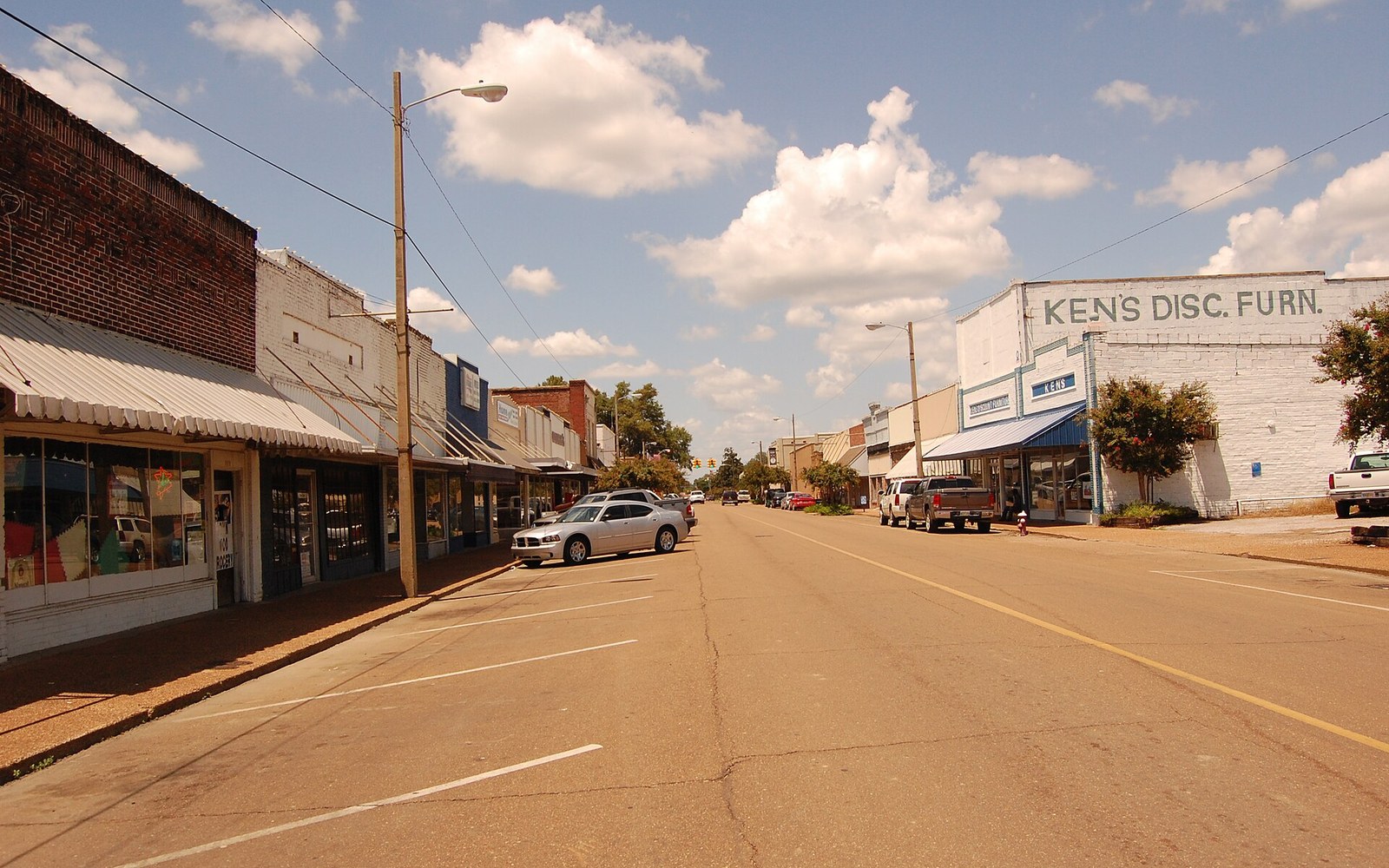
Mississippi's catfish industry ↗, which by the early 2000s was producing the large majority of farm-raised channel catfish sold in the United States, was built on the assumption that cheap grain and cheap Delta land could undercut wild-caught fish on price. That assumption held through the 1980s and into the 1990s. Then the economics shifted. Corn and soybean prices — the raw ingredients in pelleted catfish feed — moved sharply upward in the mid-2000s, driven by ethanol demand and by broader commodity market pressures. The feed bill per acre rose, and it did not come down to where it had been.
Read next
- Flavobacterium columnare
- bacterial pathogen causing columnaris; major mortality risk in warm months
- Edwardsiella ictaluri
- causes enteric septicemia of catfish (ESC); most economically significant bacterial disease in the industry
- USDA Warmwater Aquaculture Research Unit, Stoneville, MS
- primary federal research facility for these diseases
The timing overlapped with intensifying competition from imported basa and swai, Vietnamese-raised pangasius species that entered the American market at lower retail prices. The combination — rising input costs at the farm gate, falling effective prices at the counter — compressed margins in a way that individual farmers could not easily absorb. Between roughly 2005 and 2020, water surface acres in production in Mississippi fell substantially, as operators either converted ponds to row-crop agriculture or simply idled them. The acreage figures documented annually by the USDA National Agricultural Statistics Service trace that contraction precisely.
What remained was a more consolidated industry, with pressure on every point where conversion efficiency could be improved. Feed manufacturers worked on pellet formulation — the balance of protein, fat and digestible energy — because a pellet that the fish metabolise more completely produces more gain per pound purchased. Farm managers tracked feeding more carefully, because uneaten pellets sink, decompose, consume dissolved oxygen and produce nothing. Automatic feeders, demand feeders, and paddlewheel aerators running on timed cycles all entered the standard toolkit not as upgrades but as economic necessities.
Disease is the variable that can undo all of it. Columnaris (Flavobacterium columnare) and enteric septicemia of catfish, caused by Edwardsiella ictaluri, are the two most economically significant bacterial diseases in channel catfish aquaculture, documented extensively in the scientific literature ↗ coming out of the USDA Warmwater Aquaculture Research Unit at Stoneville, Mississippi. A disease outbreak drops feed conversion dramatically: the fish stop eating, or eat and do not gain, while the farmer continues paying fixed costs on the water. A pond that loses twenty percent of its biomass to an outbreak in August — the critical pre-harvest window — can eliminate the margin on the season entirely.
The arithmetic is unforgiving. Feed conversion is the lever the farmer can actually pull; fish prices and grain prices are not. That asymmetry explains why every management decision on a commercial pond — aeration scheduling, stocking density, feeding frequency, disease surveillance — is ultimately a conversion calculation in disguise, and why the industry's survivors tend to be the operators who run the tightest numbers on the feed ticket.
The acreage figures documented annually by the USDA National Agricultural Statistics Service trace that contraction precisely.
Elsewhere in Ponds & Plants
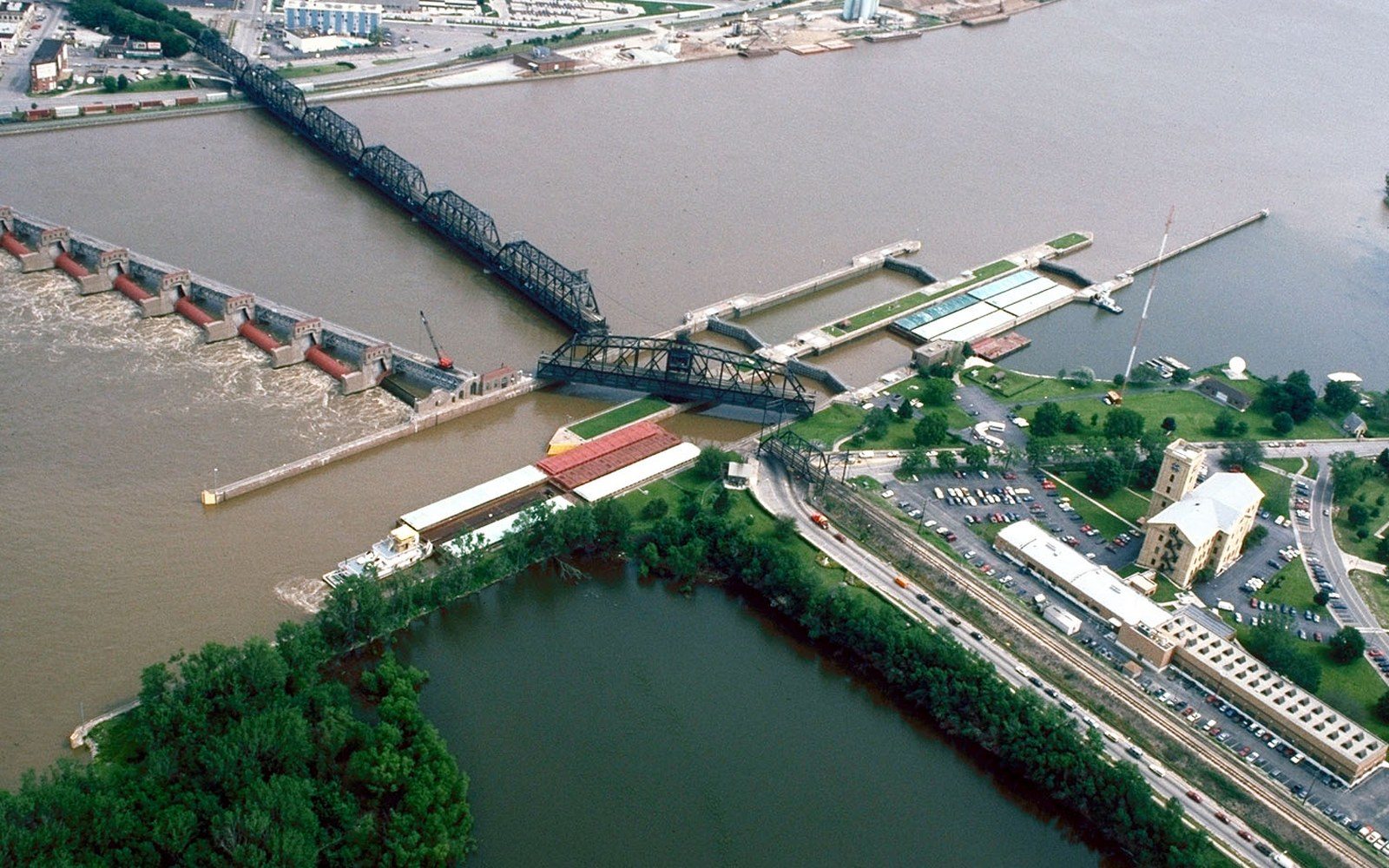
Who is responsible for the river
The Army Corps of Engineers and the Mississippi River Commission hold the mandate, and their structures define what the Delta can be used for.
The 1927 Water
The other river, and the drainage
The Yazoo drains the eastern side of the plain and the pumping and drainage schemes on it have been contested for decades.
The 1927 Water
The name is geologically wrong
The Yazoo–Mississippi Delta is an alluvial floodplain between two rivers, not a river delta, and the distinction explains its soil.
Flat Country